
Category: Recreation Reserves

  • 4 Considerations for Lighting a Pathway
    4 Considerations for Lighting a Pathway

    4 Considerations for Lighting a Pathway

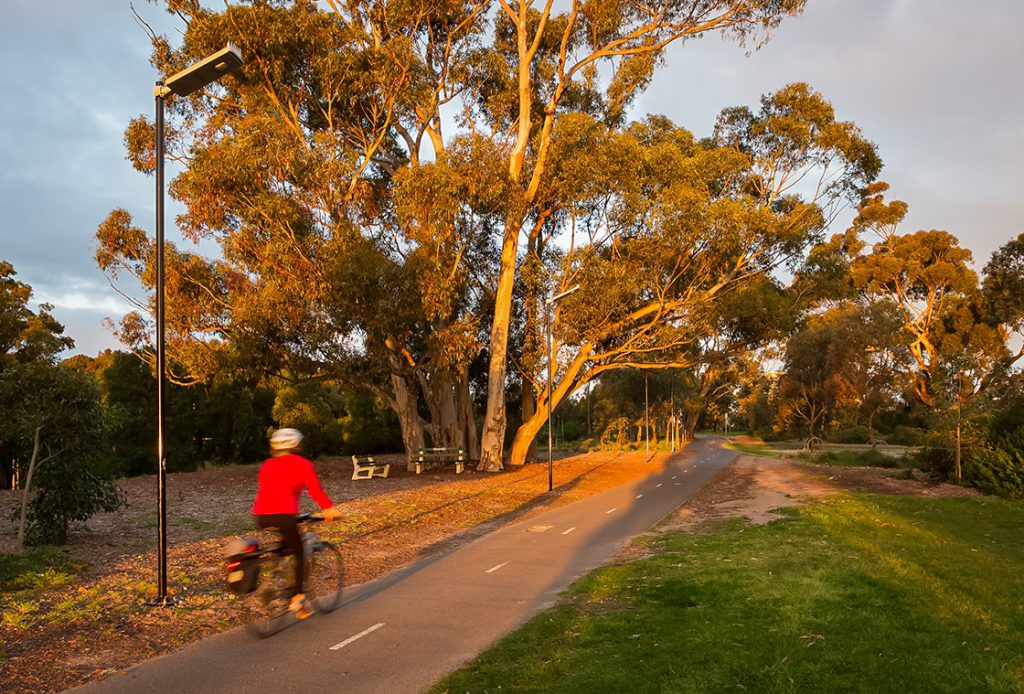
    For city authorities, private homeowners, park managers and outdoor car park managers, creating inviting, well lit, pathways is a simple yet significant way to make people feel safer. Install an effective lighting system is a better way to increase the safety of pathways. Here are 4 main things to consider for effective pathway lighting.

    1: Consider the Lighting Environment.

    Before installing a pathway light, there should be a proper environmental assessment to ensure that local ecology won’t be negatively affected by the pathway street lighting.

    2: Consider the Lighting Type.

    There are three common lighting types on pathway street lighting. Wired lighting usually requires little maintenance, but it is expensive to install. And it may not be permitted to install in riparian corridors or anywhere causing environmental disruption. Battery-powered lighting may be cheaper and easier to repair, but it requires frequent maintenance for battery changes.

    Compared to wired lighting and battery-powered lighting, solar-powered lighting is the easiest to install. With no trenching required for cables, it is eco-friendly and simple to maintain.

    3: Consider the Lighting Placement and Design.

    Solar-powered pathway lights are reliable as long as they are sized correctly for the location and are not heavily shaded by trees or structures. They are designed to be scaled effectively for pathway use and help minimize light pollution.

    4: Consider Who will Be Installing and Maintaining the Lights

    Choosing lights for the end-users and choosing lights that will be economical to install and maintain are two things. It is necessary to run a cost comparison before installing the solar-powered pathway light.

    Meanwhile, long-term maintenance costs can be a challenge for local governments with budgets already stretched thin. For wired lights, a problem may cause a whole string to go out. For battery-powered lights, the maintenance team may be out changing batteries more frequently
    than they would like if the lights are not configured properly. With solar-powered lights, there is maintenance still required like any other
    lighting solutions, however, if lithium-ion batteries are used and the technology is high quality, then maintenance is minimal.

  • Leadsun’s 15th Anniversary In Business
    Leadsun’s 15th Anniversary In Business

    Leadsun’s 15th Anniversary In Business

    2020 is a big year for LEADSUN and we are celebrating our 15th anniversary. What started out as a small business is now an industry leader in off-grid lighting projects.

    With advanced technology and a first-class global team, LEADSUN overcame lots of challenges and provided various sustainable off-grid solar public lighting solutions around the world. We couldn’t be more proud of what we’ve achieved over the last 15 years.

    Since 2005, we have exported various types of off-grid solar public lighting solutions all over the world to illuminate dark public areas, including car parks, residential communities, shopping plazas, parks, highways, and roadways, etc. Even in these turbulent times, we are still here and ready to work on your lighting projects with commercial and environmentally friendly off-grid lighting solutions.

    The Challenge

    Although 2020 has presented many challenges to us all, we need to stay positive and keep moving. As more and more public areas would like to use smart lighting systems because of more economical, more eco-friendly and safer, we will provide better off-grid solar lighting solutions all over the world all the time.

  • 7 Questions Before Starting a Commercial Public Lighting Project
    7 Questions Before Starting a Commercial Public Lighting Project

    7 Questions You Need to Ask Before You Start a Commercial Public Lighting Project

    To install traditional commercial lights for a community, you don’t need to focus on the brightness or continuous operation because there is an expectation that it will work as specified. You trench, lay cables, connect to the utility, and then you have light.

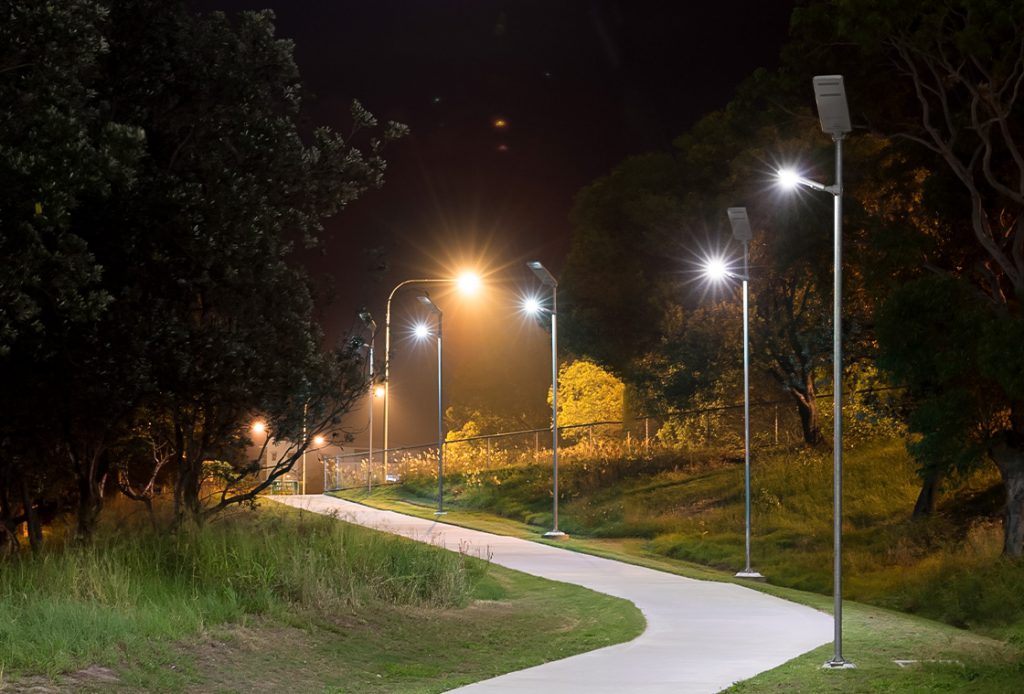
    However, many community companies are looking for economical public lighting systems to avoid the costs on trenching, laying cables and expensive on-going power. So properly modern commercial solar lighting systems are fantastic options, while they can achieve the same lighting result as traditions lights. And there are a few specific things you need to evaluate to ensure you get the right lighitng results.

    Before starting a public lighting project, there are seven questions you need to ask and get the answers.

    Q1. What is the exact location of the project?

    Try to get exact loation of the public lighting project including an accurate street address and site description if possible. This allows the suppliers to calculate solar insolation data into their system design.

    As we all know, different areas and different time receive different amounts of sunlight each day. For instance, a solar light specified for sunny, southern Los Angeles would be smaller and therefore wouldn’t be able to generate enough power to provide continuous light for Anchorage, Alaska. And a solar light specified for Anchorage would be unnecessarily large for Los Angeles.

    Knowing the project location allows the suppliers to offer their systems to meet your exact location situation and to avoid proposing systems that are too small or too large for your area. Besides, a street address can help suppliers to assess the potential shading hazards- like trees, buildings, or other obstructions- which could block the solar panels from the sun and decrease your systems’ performance.

    Q2. What kind of area are you trying to illuminate?

    It is necessary to know the lighting applications because the supplier can give a proper suggestion for the lighting output requirement, pole height, and pole spacing etc. A street, for instance, will probably require higher light levels than a park or pathway.

    So you need to confirm the lighting applications to suppliers such as car park, recreational reserve, thoroughfares or residential street.

    Q3. What is the length of the street/pathway or size of the general area?

    The length of the street/pathway or size of the general area will affect the number of lighting systems required, and the uniformity of the light hitting the ground, which all factors into the overall project cost.

    Q4. What are the height and type of the pole?

    Pole height may affect the lighting distance and number of the lighting systems required for the project. Pole type may affect the installation costs and time.

    Q5. What are requirements of light levels and uniformity?

    Because different applications will require different light levels, which plays a large role in determining the overall project cost, you need to know the standard for the light levels for the project and what are they. Besides, the kind of light levels and uniformity requirements are necessarily be known.

    Q6. What is the operating profile of the lighting system?

    Operating profile is a key aspect of the solar lighting project. Suppliers will provide the most suitable lighting systems according to these profiles.

    Here are some examples of operating profiles:

    • Dusk to dawn (all-night operation): the light will run at the same light output level all night long.
    • Dim in off-peak hours: for instance, the light will run at the required light output level for 5 hours after dusk, then dim to 30% of the required light level. 2 hours before dawn, the light levels will return to 100% until sunrise.
    • Off or dimmed at an exact time: for instance, the light will run at the required light output level until 11 p.m., then will turn off.

    Q7. What is the color temperature of the lighting system?

    Color temperature affects the fixture power output and even the project cost. While the light color temperature may be more of a preference than a requirement, considering people’s health and the environment, most cities are leaning more towards lights with warmer color temperatures.

    In Summary

    These qustions can help you get right solar lighting systems that will meet your project requirements over the long term at no extra cost.

    Contact us to learn more about commercial public lighting systems and how they can affect the overall performance and cost.