Category: Featured

  • Solar LED Lighting for Safer Walking Tracks
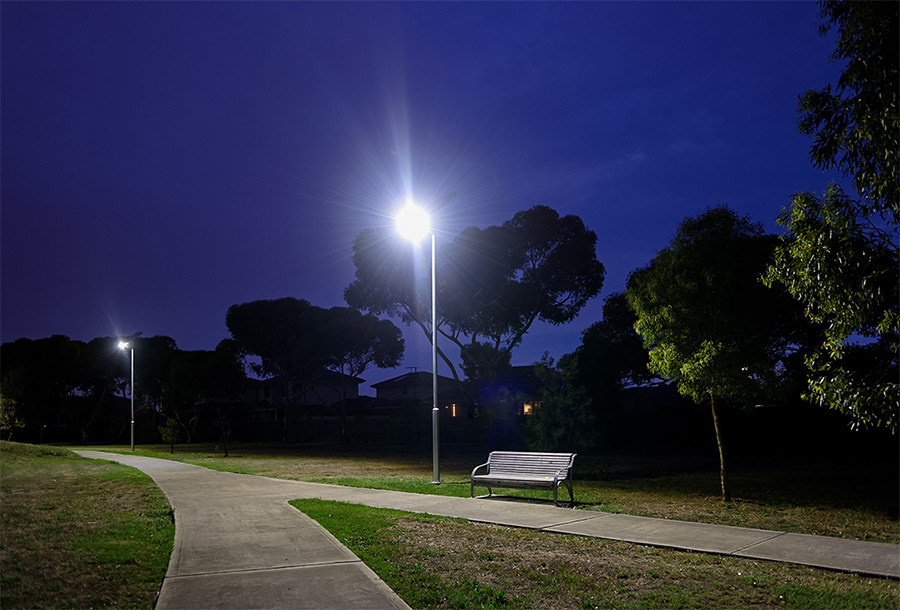
    Solar LED Lighting for Safer Walking Tracks

    Solar LED Lighting Relief – Channel 9 News Story Campaigning for More Accessible and Safer Walking Tracks

    Three times as many Victorians are searching for walking maps online and Heart Foundation figures show 31 percent of Australians were walking more during the COVID-19 lockdown period.

    Now, residents in Victorian and fitness groups are beding called on to lobby their local council to apply for a new State Government grant that provide funding. It will be used to install solar LED lighting on popular pathways and recreational trails.

    As Victoria Walks Executive Officer, Ben Rossiter heads up the campaign to call for applications to the Community Sport stimulus program of $68 million before they close on June 19.

    “Since mid-March, an exponential growth in the number of Victorians looking for excellent and safe places to walk can be seen by Victoria Walks,” Dr Rossiter said.

    “The investment in good walking infrastructure including lighting is very important since so many more people realising the benefits of walking. Twice the rate of women than men walk, and for many, good lighting is helpful in their personal safety.”

    As a world leader in solar public lighting, Leadsun is an associate member of Victoria Walks. Matt Pollard, managing director of Leadsun Australia, siad just as sporting clubs upgrade facilities, walking groups and residents are now calling for improvements to pathways and trails.

    “Many of the recreational trails where people always walk are in areas where traditional street lighting can’t reach or it’s too expensive to even try,” Mr. Pollard said.

    “In most cases, people either won’t walk along the path before dawn or after dark, or they’ll go with a smartphone or torch to try to see where they’re going. One for one, solar LED lighting is more commercial than tradition public lighting as there’s no need for extensive trenching, no electrical wiring, and the power stores in the battery for three days.”

    Dr. Rossiter said Victoria Walks had supported previous campaigns to have solar LED lighting installed across Victoria and urged residents to contact their local council before applications for the grant closed.

    “Walking is an activity Victorians want to do. You don’t need special equipment. You can do it with your family, friends or by yourself. If you shine a light on a path, it’s more likely to be used,” he said.

    “We want to improve walking conditions so that it is more accessible. So it’s very important residents talk to their council so we can walk along the pathway day and night.”

  • Wodonga Council Lights The Way

    Wodonga Council Lights The Way

    Wodonga Council Plans Expansion of Solar Pathway Network as The Number of People Walking Increases

    There are more than 100 solar lights installed to illuminate paths across Wodonga with another 47 new solar lights to be installed in the next stage.

    Wodonga Council’s sport and recreation manager Liona Edwards and deputy mayor Brian Mitchell met with Matt Pollard, director of Leadsun Australia, to showcase the project and discuss the next stage.

    The solar path lights are along the House Creek trail through Wodongaincluding David Bishop Park, Arthur Dunstan Park, Belvoir Park to the gateway Island with Linkages to Birallee Park, Wetlands Park, James Taverny Park, and George Looms Park.

    The next stage will install 47 new solar path lights to cover the Parkers Road section and Moorefield Park Drive to the underpass at Wodonga TAFE and complete the link from Forrest Mars Ave to Belvoir Park.

    This continuation of solar lighting project will finish key linkages to the existing path networks already benefitting from previous installations. Besides, the solar path lights connect to major community facilities including Wodonga TAFE, Victory Primary School, and La Trobe University.

    The lights provide lit access to amenities such as Wodonga CBD, schools, hospitals, sporting reserves, etc. They help increase perceptions of safety, reduce anti-social behavior and improve natural surveillance.

    Wodonga Council sport and recreation manager Liona Edwards said the rollout of the solar lighting project enhanced the extensive pathway network that was well-used by the community. She also said that the solar lighting project is an initiative aiming to enhance personal safety, deter antisocial behavior and create improved levels of connectivity in the community.

    It was good to install automated counters on each of the city’s key main walking and cycling corridors – the House Creek Trail, the High Country Rail Trail, and the Stock Bridge leading to Albury – to show just how well-used our pathways are by the community.

    Counters have shown an average of more than 100% increase in usage during the past two months compared to the same time last year.

    The latest path counter data is taken along the House Creek Trail and the High Country Rain Trail. It is shown that during the months of March to May, while the full COVID-19 restrictions were in place, more than double the regular users were making use of sections of the trails. In the meanwhile, gyms and sports clubs are still closed.

    Benefitting from the newly sealed surface and furniture recently installed along the Rail Trail, average daily users increased by up to 171% near Whytes Road and 89% closer to the CBA. The recent addition of solar path lights assisted the House Creek Trail’s daily usage is increasing up to 177% out by Clyde Cameron Reserve.

  • Light At The End Of The COVID-19 Tunnel
    Light At The End Of The COVID-19 Tunnel

    Creating Safer & More Attractive Public Spaces After Dark – A Light At The End Of The COVID-19 Tunnel

    Like many Victorians on Saturday, I wanted to get back outside and hit a track, trail, or pathway to take advantage of the mild conditions. Before COVID-19 – and for the last several years – the 1000 Steps (in the Dandenong Ranges east of Melbourne) had been my destination of choice to get amongst nature and enjoy the fresh air and open spaces while challenging myself up and down the steps. I’ve always loved how healthy and revitalized it makes me feel.

    So, on Saturday, with lockdown restrictions easing and parks reopening, I decided the time had come to reacquaint myself with ‘the steps’. Unfortunately, my reacquaintance ended before it even began.

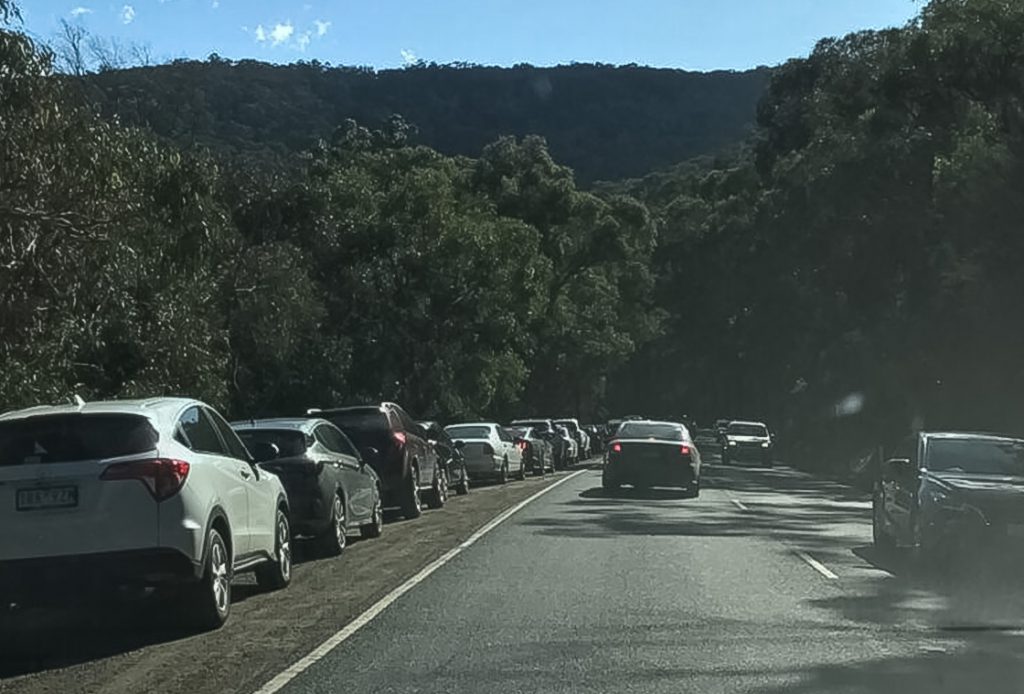
    Why? Because hundreds – perhaps thousands – of others had the same idea. The park was packed, with the adjacent road and streets jammed with cars and more people wanting to get in, bringing traffic to a standstill. The whole experience was like arriving at the concert of a huge music star, but in this case, the only star was ‘The Steps’ and she’s been the resident star attraction for decades. So why all the fuss now?

    Maybe it’s because there seems to now be a surge in people realizing that exercise and physical activity doesn’t need to be sophisticated. It doesn’t need a gym or a tennis court. There’s been almost a collective realization that walking is the most convenient, simplest exercise most of us can do.

    Which it is. But does this now pose an even greater risk to people’s health?

    What I realized on Saturday was that although we have so many amazing open spaces with walkways and trails, we still don’t always have the time to use them during weekday daylight hours. It seems we still have to leave it to the weekends.

    Only now, those weekends and those parks are full of a lot more people than before. People who have now discovered (or rediscovered) the joy of exercising out in our parks. But, with social-distancing recommendations still rightly in place, is this surge in numbers of people crowding into our parks on the weekends putting people at even greater risk of COVID-19 transmission?

    Don’t get me wrong – it’s fantastic that so many more people are appreciating just how physically and mentally beneficial walking out in our parks can be. But what Saturday’s experience showed me is that we do indeed have the challenge to ensure we can maintain social-distancing measures while allowing people to continue to enjoy our world-leading parks and open public spaces.

    It’s a great challenge to have, but it’s still a challenge. But like many challenges, when you look at it a bit more closely, there’s a clear silver lining of opportunity.

    What if we could upgrade existing facilities and extend their hours of usage beyond just daylight hours, particularly from Monday to Friday when people are usually at their busiest? To allow people to use those facilities after daylight hours too?

    There are currently limited options for attractive, safe walking paths or trails that people can use after hours, and it seems many of our most fantastic open spaces and community assets are underutilized.

    There’s a clear opportunity – perhaps even a community and health responsibility – to extend their hours of usage.

    A silver lining in golden public assets.

    If we could extend these spaces’ usable hours, we could turn already-established networks of community infrastructure into golden assets that can be used not just during daylight hours, but in the early morning and evenings as well.

    We saw it in the mid-90s when we extended hours of retail shopping on Thursday and Friday nights, and how popular that has become. Also, we have already extended the usable hours of other recreation and sporting facilities with adequate lighting, like tennis, allowing people to do these activities outside daylight hours. Why should walking trails and pathways be any different? Why shouldn’t walking for exercise and leisure be deemed just as important as tennis?

    After all, as is so rightly pointed out by Victoria Walks Inc – a walking health promotion charity working to get more Victorians walking every day – if you design communities for automobiles, you get more automobiles. If you design them for people, you get walkable, liveable communities.[1]

    Walkable public spaces make good health and economic sense – but safety is still a huge concern.

    Walking for exercise is the most common form of transport in Melbourne, and has huge benefits both for health and economics. Recreational walking, for example, is by far the most common physical activity for Australians aged 15 years or over, with nearly 45% of the population actively walking for recreation at least once a year[2].

    However, we haven’t got anywhere near enough attractive, inviting, and safely lit environments to accommodate our recreational walkers. Because where Australia really falls down is on gender disparity in feeling safe in public spaces at night. While Australian men feel above-average safety, only women in Chile, Mexico, and Hungary feel less safe walking alone at night. For every 10 Australian men who say they feel safe walking at night, there are only 6.3 women who would say the same – the worst gender differential in the OECD [3]

    It is clear that limited walking options in some places create barriers and concerns about personal safety, particularly for women.

    The SMART light at the end of the tunnel.

    Integrating public lighting systems can make all the above a reality, however, until recently, there have been three key barriers to this – Number 1. High cost for installation and ongoing electricity fees, Number 2. Disruption and Destruction caused during the installation process by trenching underground electric wiring, Number 3. The length of time it takes for permits and specifications to be drawn up from electricity companies before a project can become shovel-ready.

    However, there is now a solution that overcomes these barriers and enables people to exercise when they want and where they want in an open space environment that has enhanced safety and is attractive to use. It’s called Smart Public Lighting.

    It’s SMART because it is far more: 

    Sustainable, in that it’s completely powered by the sun and off the electricity grid.

    Modern, in terms of both innovative technical functionality and design aesthetic.

    Adaptive in the different environments it can be installed in and operate specific to the needs of a given application.

    Robust, both in build quality and dependable performance that can withstand electricity blackouts and brownouts.

    Technologically advanced, through the most innovative functionality like wireless remote control and monitoring and automatic dimming functions that automatically adjusts the level of brightness upon detection of pedestrian movement around the lights.

    The solution is as clear as day – or hopefully, night.

    LEADSUN proudly specializes in innovative SMART public lighting solutions for open spaces – in particular, for walking trails, shared pathways, recreation reserves, and car parks.

    As SMART public lighting specialists working with trusted local government and corporate partners since 2005, we are industry leaders in the provision of efficient, smart public lighting solutions that have enhanced the safety of communities across Australia and the world. 

    Now more than ever, we’re here to bring light to Australia’s public spaces, easily and efficiently.

    Click here to learn more about how we can light up your part of the world.

    [1] Parris Glendening and Christine Todd Whitman in Victoria Walks Corporate Supporter Guide.

    [2] Victoria walks 2019, Walking and transport in Melbourne suburbs.

    [3] Ibid

  • Kokoda Track Foundation

    Kokoda Track Foundation

    Leadsun & the Kokoda Track Foundation, Ready for the Partnership to Help Shine a Light on PNG!

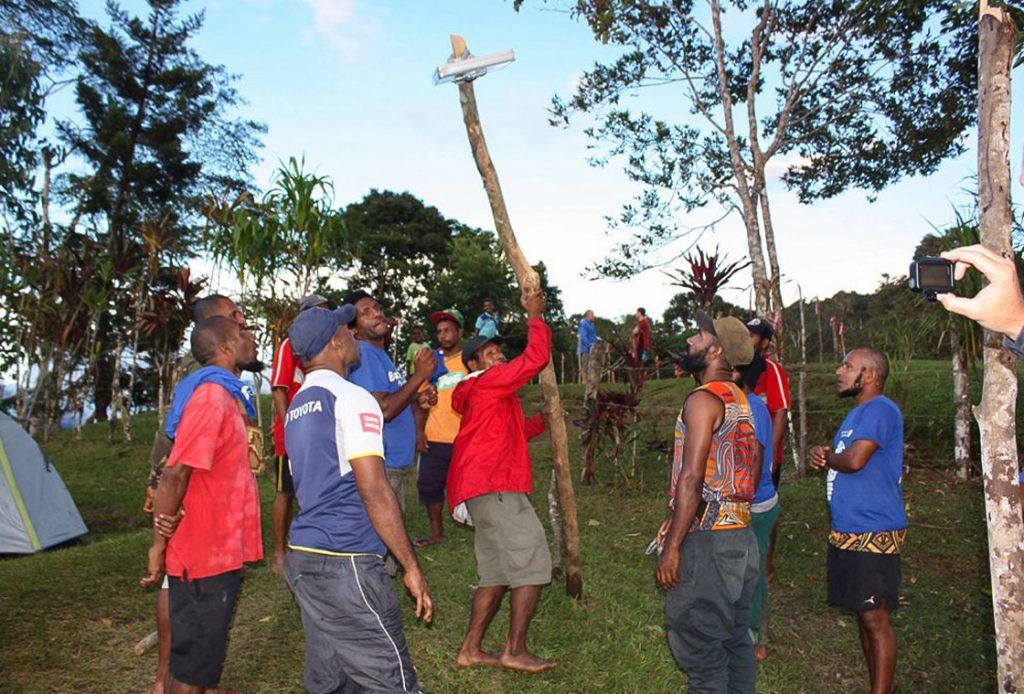
    Leadsun is proud to announce a Collective Energy(c) Initiative with the Kokoda Track Foundation www.ktf.ngo after our Managing Director Matt Pollard recently undertook the Kokoda Track journey and also explored some exciting projects to help light-up communities surrounding the Kokoda Track in PNG.

    During Matt’s visit to PNG, he learned that a staggering 87% of Papua New Guineans still don’t have access to grid electricity infrastructure and most villages are pitch black at night. But rest assured; Help is on the way and so far more than 3,000 indoor solar lighting kits have already been delivered & installed throughout 30 PNG Villages as part of KTF’s initiatives to provide lighting in people’s homes.

    Leadsun will be further supporting the ‘Kokoda Track Foundation’ with their ambitious Livelihood Project https://lnkd.in/gJUT8-N which seeks to build new community learning centers throughout the Kokoda Track region, and also provide them with access to solar-powered light and power systems which will help enable further education for young people and a better chance of a brighter future!

  • 4 Considerations for Lighting a Pathway
    4 Considerations for Lighting a Pathway

    4 Considerations for Lighting a Pathway

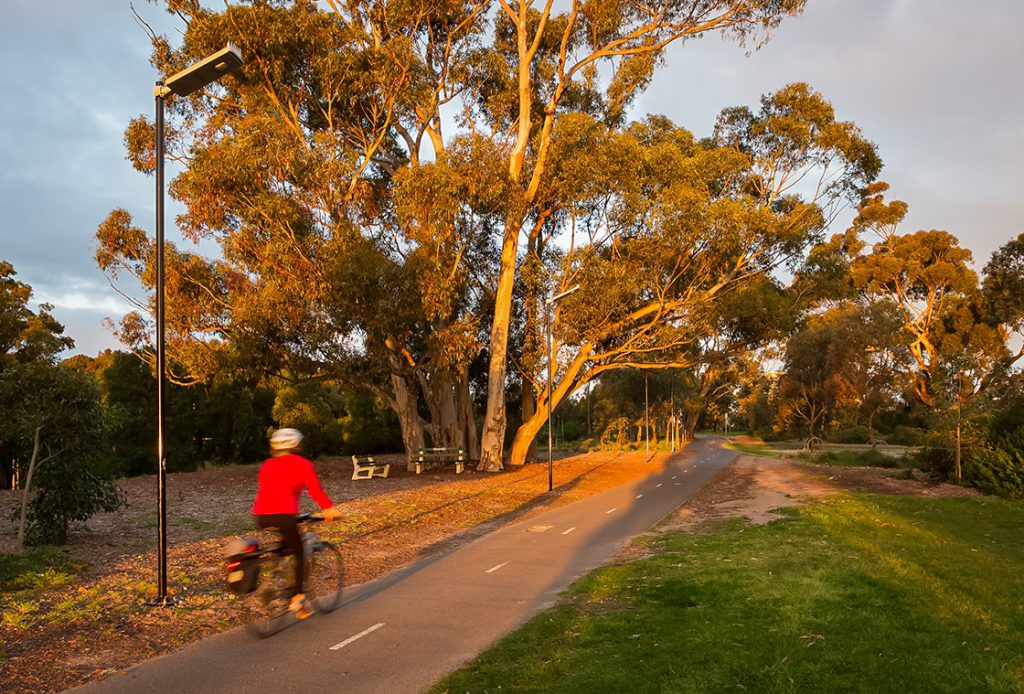
    For city authorities, private homeowners, park managers and outdoor car park managers, creating inviting, well lit, pathways is a simple yet significant way to make people feel safer. Install an effective lighting system is a better way to increase the safety of pathways. Here are 4 main things to consider for effective pathway lighting.

    1: Consider the Lighting Environment.

    Before installing a pathway light, there should be a proper environmental assessment to ensure that local ecology won’t be negatively affected by the pathway street lighting.

    2: Consider the Lighting Type.

    There are three common lighting types on pathway street lighting. Wired lighting usually requires little maintenance, but it is expensive to install. And it may not be permitted to install in riparian corridors or anywhere causing environmental disruption. Battery-powered lighting may be cheaper and easier to repair, but it requires frequent maintenance for battery changes.

    Compared to wired lighting and battery-powered lighting, solar-powered lighting is the easiest to install. With no trenching required for cables, it is eco-friendly and simple to maintain.

    3: Consider the Lighting Placement and Design.

    Solar-powered pathway lights are reliable as long as they are sized correctly for the location and are not heavily shaded by trees or structures. They are designed to be scaled effectively for pathway use and help minimize light pollution.

    4: Consider Who will Be Installing and Maintaining the Lights

    Choosing lights for the end-users and choosing lights that will be economical to install and maintain are two things. It is necessary to run a cost comparison before installing the solar-powered pathway light.

    Meanwhile, long-term maintenance costs can be a challenge for local governments with budgets already stretched thin. For wired lights, a problem may cause a whole string to go out. For battery-powered lights, the maintenance team may be out changing batteries more frequently
    than they would like if the lights are not configured properly. With solar-powered lights, there is maintenance still required like any other
    lighting solutions, however, if lithium-ion batteries are used and the technology is high quality, then maintenance is minimal.

  • Leadsun’s 15th Anniversary In Business
    Leadsun’s 15th Anniversary In Business

    Leadsun’s 15th Anniversary In Business

    2020 is a big year for LEADSUN and we are celebrating our 15th anniversary. What started out as a small business is now an industry leader in off-grid lighting projects.

    With advanced technology and a first-class global team, LEADSUN overcame lots of challenges and provided various sustainable off-grid solar public lighting solutions around the world. We couldn’t be more proud of what we’ve achieved over the last 15 years.

    Since 2005, we have exported various types of off-grid solar public lighting solutions all over the world to illuminate dark public areas, including car parks, residential communities, shopping plazas, parks, highways, and roadways, etc. Even in these turbulent times, we are still here and ready to work on your lighting projects with commercial and environmentally friendly off-grid lighting solutions.

    The Challenge

    Although 2020 has presented many challenges to us all, we need to stay positive and keep moving. As more and more public areas would like to use smart lighting systems because of more economical, more eco-friendly and safer, we will provide better off-grid solar lighting solutions all over the world all the time.

  • Lighting Around Australian Urban Forest
    Lighting Around Australian Urban Forest

    Residents Around Australian Urban Forest Safer Thanks To Lighting Reality

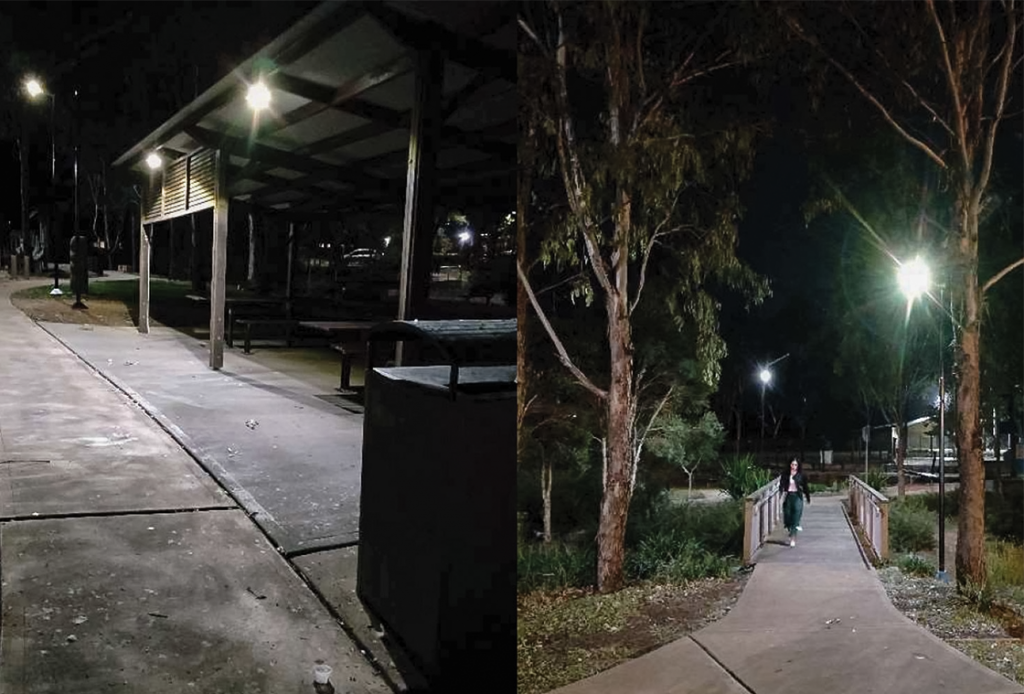
    Residents and visitors always enjoy their spare time in Narellan Urban Forest whether it is to play on the equipment or read a book. They are happy and feel safer thanks to the new led solar lights plan created and implemented by LEADSUN, using the latest software from UK-based Lighting Reality.

    Camden Council in New South Wales wanted to improve the seurity of the urban forest in Narellan by installing a new solar lighting system along a 150m stretch. This solar lighting system needs to help detering loitering, reducing vandalism, and providing a safer walking route for local residents.

    As a solar powered lighting specialist, LEADSUN took on the project with quality solar pathway lights to create a well-lit and safe walkway for pedestrians, while also ensuring that the forest wildlife and surrounding homes were not negatively impacted.

    LEADSUN, founded in 2005, is one of the leaders committed to innovation and intelligent eco-friendly solutions in smart lighting industry.

    Gordon Manzione, a business development manager for LEADSUN, said:’ We used Lighting Reality PRO to place five freestanding 10W LED solar lights every 30m along the pathway, while tree picnic shelters were illuminated with 5W link lights.”

    “The solar pathway lighting system was powered by LEADSUN AE3C series with 80W solar engines circuited to each of the shelters. The resulting consistency of lighting effect is excellent with no ‘black’ spots along the pathway.”

    “The urban forest also features a unique light timing sequence where they dim down to 30% brightness after five hours from dusk and are then operated by a motion detector until dawn.”

    “Not only is the amount of measured vandalism down, but locals are also very happy with the new lighting which helps them to feel safer when walking to and from their local shops.”

    Bewdley-based developer Lighting Reality provides software that lighting projects are allowed to create by designersfor all manner of exterior environments, in a fraction of the time that it takes other competing lighting design software.

    As a marketing coordinator for Lighting Reality, Rachel Green said:” With the fantastic work by Leadsun’s project designers and their specialist products, the urban forest area is now a much safer route for all. This is a great example of a challenging project that has been assisted by Lighting Reality software, and really shows the applications’ ability to be applied ina wide range of outdoor environments.” The Lighting Reality PRO software supports all major international standards and is constantly evolved as these standards are upgraded.

    First launched in 2001, Lighting Reality Pro is now used by around 97.5% of British councils, and the company estimates that around 90% of exterior lighting engineers in the UK own a copy.

  • 7 Questions Before Starting a Commercial Public Lighting Project
    7 Questions Before Starting a Commercial Public Lighting Project

    7 Questions You Need to Ask Before You Start a Commercial Public Lighting Project

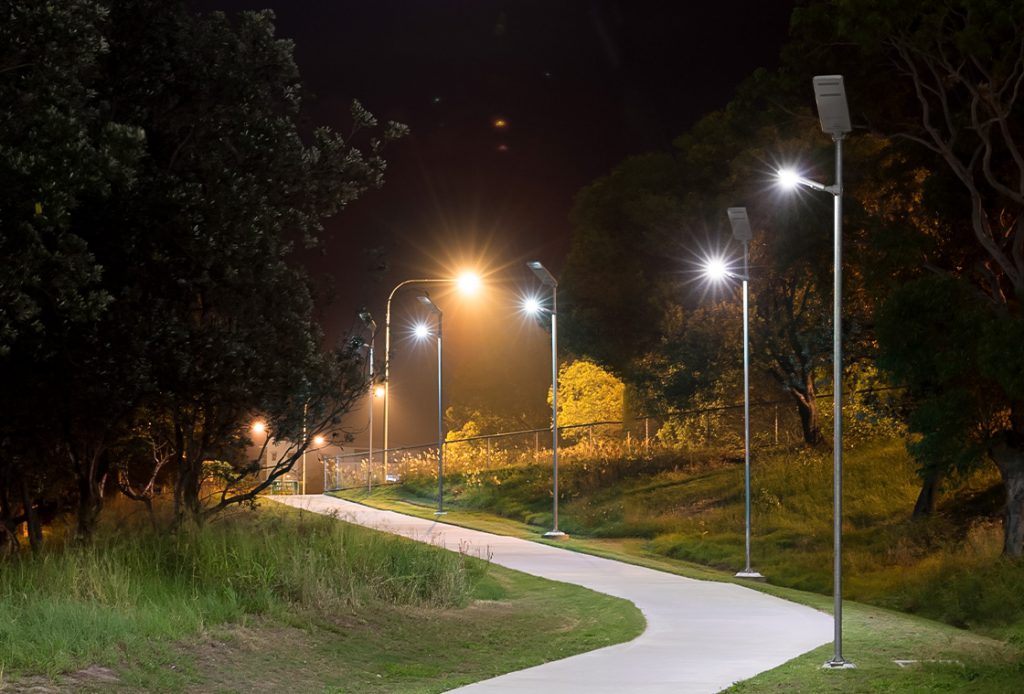
    To install traditional commercial lights for a community, you don’t need to focus on the brightness or continuous operation because there is an expectation that it will work as specified. You trench, lay cables, connect to the utility, and then you have light.

    However, many community companies are looking for economical public lighting systems to avoid the costs on trenching, laying cables and expensive on-going power. So properly modern commercial solar lighting systems are fantastic options, while they can achieve the same lighting result as traditions lights. And there are a few specific things you need to evaluate to ensure you get the right lighitng results.

    Before starting a public lighting project, there are seven questions you need to ask and get the answers.

    Q1. What is the exact location of the project?

    Try to get exact loation of the public lighting project including an accurate street address and site description if possible. This allows the suppliers to calculate solar insolation data into their system design.

    As we all know, different areas and different time receive different amounts of sunlight each day. For instance, a solar light specified for sunny, southern Los Angeles would be smaller and therefore wouldn’t be able to generate enough power to provide continuous light for Anchorage, Alaska. And a solar light specified for Anchorage would be unnecessarily large for Los Angeles.

    Knowing the project location allows the suppliers to offer their systems to meet your exact location situation and to avoid proposing systems that are too small or too large for your area. Besides, a street address can help suppliers to assess the potential shading hazards- like trees, buildings, or other obstructions- which could block the solar panels from the sun and decrease your systems’ performance.

    Q2. What kind of area are you trying to illuminate?

    It is necessary to know the lighting applications because the supplier can give a proper suggestion for the lighting output requirement, pole height, and pole spacing etc. A street, for instance, will probably require higher light levels than a park or pathway.

    So you need to confirm the lighting applications to suppliers such as car park, recreational reserve, thoroughfares or residential street.

    Q3. What is the length of the street/pathway or size of the general area?

    The length of the street/pathway or size of the general area will affect the number of lighting systems required, and the uniformity of the light hitting the ground, which all factors into the overall project cost.

    Q4. What are the height and type of the pole?

    Pole height may affect the lighting distance and number of the lighting systems required for the project. Pole type may affect the installation costs and time.

    Q5. What are requirements of light levels and uniformity?

    Because different applications will require different light levels, which plays a large role in determining the overall project cost, you need to know the standard for the light levels for the project and what are they. Besides, the kind of light levels and uniformity requirements are necessarily be known.

    Q6. What is the operating profile of the lighting system?

    Operating profile is a key aspect of the solar lighting project. Suppliers will provide the most suitable lighting systems according to these profiles.

    Here are some examples of operating profiles:

    • Dusk to dawn (all-night operation): the light will run at the same light output level all night long.
    • Dim in off-peak hours: for instance, the light will run at the required light output level for 5 hours after dusk, then dim to 30% of the required light level. 2 hours before dawn, the light levels will return to 100% until sunrise.
    • Off or dimmed at an exact time: for instance, the light will run at the required light output level until 11 p.m., then will turn off.

    Q7. What is the color temperature of the lighting system?

    Color temperature affects the fixture power output and even the project cost. While the light color temperature may be more of a preference than a requirement, considering people’s health and the environment, most cities are leaning more towards lights with warmer color temperatures.

    In Summary

    These qustions can help you get right solar lighting systems that will meet your project requirements over the long term at no extra cost.

    Contact us to learn more about commercial public lighting systems and how they can affect the overall performance and cost.