LEADSUN sincerely invites you to the LightFair 2022 held in Las Vegas Convention Center. We are proud to present the latest grid-free lighting technology and provide you with reliable solar power solutions.
LightFair is the premier, annual architecture and commercial lighting trade show and conference, the preferred marketplace, networking, and learning destination bringing the best and the brightest together. The LightFair Conference has been setting the standard in continuing lighting education for 30+ years offering the lighting community the chance to earn CEUs, learn from the best and connect with leading practitioners.
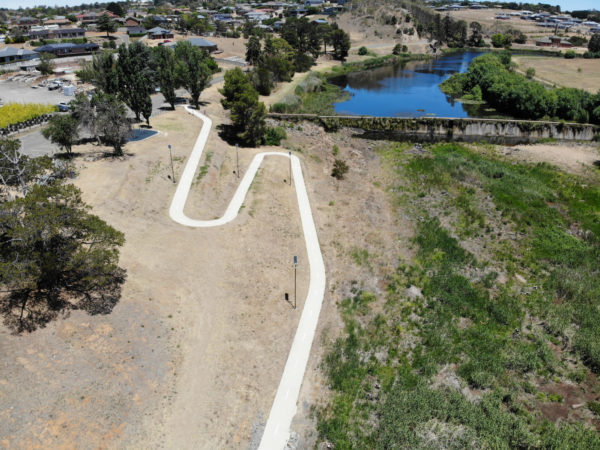
Thanks to the Covid-19 many of us find ourselves in lockdown with little reprieve other than a morning potter or an evening stroll. In Goulburn, thanks to what is being called Australia’s largest solar path light installation, locals can now more easily walk and cycle their way to the salutary effects of a daily jaunt.
With the threat of lockdown once again in effect or on the cards for large parts of the nation, many of us are once again facing the prospect of having very little to look forward to each day other than a solitary stroll or a potter-about with a partner.
In fact, the Heart Foundation estimates that 30% of people are walking more than usual thanks to the impacts of the pandemic. That’s why the Goulburn Mulwaree Council (Council) in New South Wales (NSW) has installed what is said to be Australia’s largest solar pathway lighting project.
After all, at this time of year, when the sun seems to show up more out of habit than wanting to put a good long shift in, the need for lighting along our walkabout pathways is at its most luminous. That’s why Council nudged Melbourne-based company Leadsun to install 160 of its AE3C solar lights along 10km of the Wollondilly River Walking Track in Goulburn.
Leadsun, which holds a patent on what it calls the first “all-in-one LED solar path light”, began the project a year ago, and Managing Director Matt Pollard said that sporting clubs, walking groups, and residents were increasingly lobbying local governments to apply for grants to install Smart solar lighting to improve access and safety.
Council utilized the majority of a $500,000 Federal Sport and Recreation grant for the solar lighting of the riverine track. Although it must be said, one for one, solar public lighting is cheaper than your normal street lighting, partly because it doesn’t require much trenching or electrical wiring, but also because the energy is free from the sun and can be stored in lithium-ion batteries for up to three days.
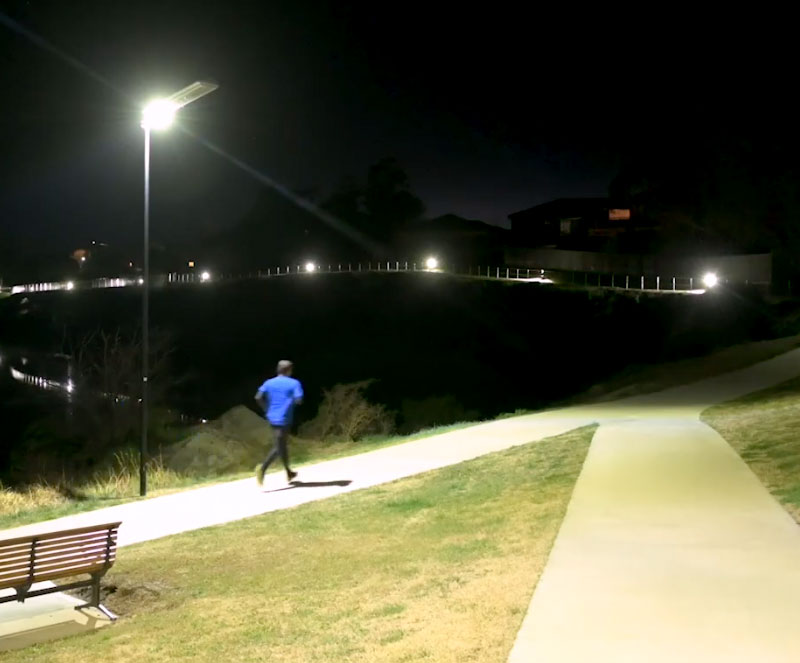
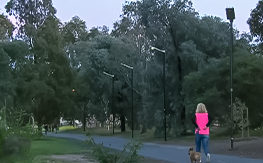
Wollondilly River Walking Track powering up for a busy night.
At just over 160 solar lights, Pollard believes its the largest solar pathway lighting project in Australia. Even fossil fuel enthusiasts like Federal Energy Minister Angus Taylor, who would probably prefer Australia’s bush pathways lit by the incendiary fire of gaslamps, had to admit that the walkway in Goulburn was now safer and more accessible. “I’m thrilled that the installation of solar lighting will extend the hours of use of the walkway,” said Taylor.
“There is an increasing awareness that we can all do our bit to reduce carbon emissions across a broad range of smaller-scale projects and in our individual lives,” continued Taylor with a distinct lack of ironical self-awareness. “Along with many Goulburn residents, I enjoy running this track early in the morning or later in the afternoon. the lights will be a great addition to the course, particularly in winter.”
Another such Goulburn resident is Daniel Strickland, a member of Mission Australia’s Man Walk group and a regular trotter of the track, who said the path is far busier than before, especially at those times before the dawn and after the dusk, when previously “we would come along with our iPhones and our torches.” Unfortunately, Strickland failed to mention having ever seen Energy Minister Taylor running the track with gaslamp outstretched before him like Sherlock Holmes on one of his deductive exercises along the Thames.
Nevertheless, the clear success and savings of the project mean that Council is now planning a further 1.5km extension to the Smart lighting project. Leadsun, lead on.
Sustainable Lighting for Your Communities Most Valuable Assets
Shared Pathways
Car Parks
Recreation Reserves
Street Lighting
The Leadsun Difference
Leadsun’s Advanced Battery Management System
Leadsun uses new-generation Lithium LiFePO4 batteries which are the heartbeat of our off-grid systems. The custom-built design provides 3 times more storage and power capacity compared to traditional Lead Acid batteries enabling maximum performance, reliability and longevity, all within a limited space.
Our patented ground-breaking battery technology can DOUBLE the normal life expectancy of any other traditional Lithium battery system by never fully charging or discharging its cells. This prevents unnecessary full range operating which reduces stress and lengthens the cycle life of the battery of up to 10 years.
This world first technology is only available from Leadsun
Leadsun – Always Innovating, Always Moving Forward, and Always Dependable
Our cities are being transformed with new technologies faster than ever, posing new challenges every day. That’s why Leadsun partners with municipalities across Australia to fully understand their needs and be the trusted advisor steering them into the future.
Leadsun applies the experience and expertise we’ve built distributing more than 20,000 light systems – as well as our world-class solar lighting engineering design and technology – to provide local authorities solutions and guidance they can depend on.
With unprecedented numbers of people accessing public recreational areas across Australia due to COVID-19 – and councils needing to provide safe access to those spaces – we’ve been busier than ever bringing the light of day into the night for safer, more active communities.
This month, we highlight how we lit up Middle Arm Road in Goulburn and finished a milestone project lighting 10 kilometres of walkway and cycle paths. We also share 6 advantages of SMART public off-grid solar lighting and let the numbers do the talking with a grid-vs-grid-free cost comparison.
We’re also excited to welcome Leadsun’s new Strategic Partnerships Manager Josh Trouchet, who brings expertise and experience built through an impressive career in commercial and residential construction across Australia. Josh would love to hear from you so get in touch today to learn more about the benefits of our off-grid solar lighting and why it’s the preferred choice for public open space lighting.
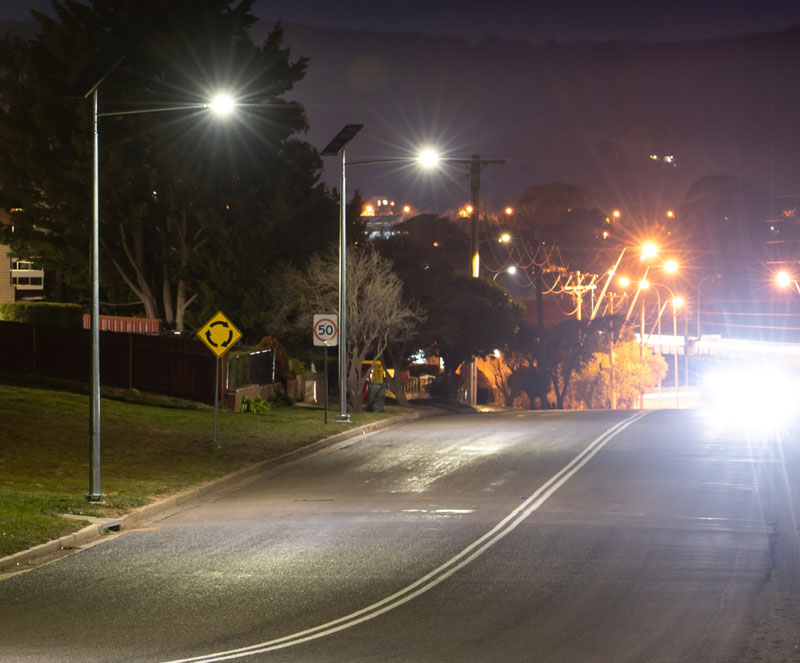
Middle Arm Road lit up under the Safe Road Program
Leadsun was recently approached to provide an affordable yet compliant, dependable solution to light up the popular Middle Arm Road in Goulburn under the Council’s Safe Road Program. The resulting cable-and-grid free solution gives council long-lasting, reliable and sustainable lighting for years to come. Click below for the full story and video footage of the project.
Lighting up Goulburn – the largest public solar lighting project of its kind
With 31% of people walking more than usual during COVID-19, Australian local governments are being urged to invest in SMART off-grid solar lighting. As part of a milestone project for Goulburn Mulwaree Council, Leadsun installed 160 lights along 10km of walkway and cycle paths, in what is the largest public solar lighting project of its kind in Australia.
With huge numbers of people accessing public recreational spaces, it’s a crucial time for local governments to consider the role of sustainable, affordable SMART public lighting in shaping safer, more active communities. Click below for the 6 key advantages of SMART public lighting – they may surprise you.
Eye opening – Grid versus Grid-Free installation cost comparison
As well as environmental, efficiency, safety and time benefits, SMART public lighting provides significant cost benefits. See this cost comparison to find out how using grid-free solar instead of grid-connected wired lighting for a 1km pedestrian pathway can save your project at least $50,000.
If this newsletter was of interest to you and you’d like to see more of the same, please sign up below and join our community. We’ll only send you relevant content once a month so we’re not cluttering your inbox.
Wondonga Council Plans Expansion of Solar Pathway Network as the Number of People Walking Increases
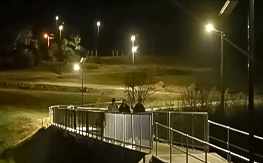
With more people walking and 31% of people walking more than usual during COVID-19 the Wodonga Council is doing what more councils are being urged to do – invest in solar pathway lighting.
Victoria Walks Executive Officer Ben Rossiter is heading up the campaign to call on councils across Victoria to apply for their share of Government Safety Grants available to help fund lighting projects.
“Since mid-March, Victoria Walks has seen exponential growth in the number of Victorians looking for great, safe places to walk,” Dr. Rossiter said.
Since 2018 Wodonga Council has led the way in installing solar lighting across kilometres of popular pathways including at Birallee Park, David Bishop Park, Arthur Dunstan Park, Frank Kier Park, George Looms Park, Westlands Park, James Taverny Park and Belvoir Park.
Melbourne-based Leadsun, a world leader in solar public lighting and an associate member of Victoria Walks, has worked with Wodonga Council to install the lighting which has made pathways more accessible and helped improve safety.
Managing Director Matt Pollard said with the increase in local exercise and people out walking, community groups and residents are urging their local councils for improvements to pathways and trails.
“Many of the recreational trails where people love to walk are in areas where you can’t get traditional street lighting in or it’s too expensive to even try,” Mr Pollard said.
“In most cases, people either won’t use the path before dawn or after dark, or they’ll walk with an iPhone or torch to try to see where they’re going. One for one, solar lighting is more cost-effective than traditional electrical public lighting as there’s no need for extensive trenching, no electrical wiring, and the power stores in the battery for three days.”
Wodonga Council said the rollout of the solar lighting project enhanced the extensive pathways network that was well-used by the community.
“The solar lighting project is an initiative that aims to enhance personal safety, deter antisocial behavior and create improved levels of connectivity in the community,” a Council spokesperson said.
Housing New Zealand – Solar Shared Pathway Lighting
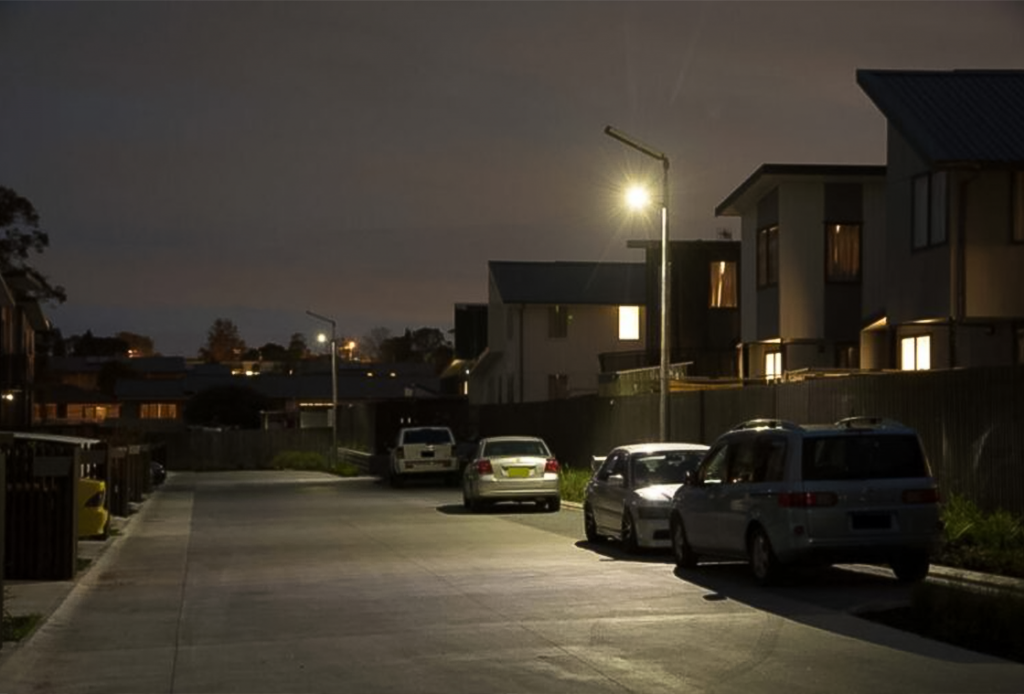
Project: Communal Accessway Lighting
Location: Auckland
Housing New Zealand’s challenge is to provide housing for the nation’s most vulnerable people in a way that’s safe, healthy, sustainable, and cost-effective. The Leadsun solar street light is helping to meet those needs.
This HNZ development on Auckland’s North Shore is one of many new communities using solar shared pathway lighting.
In this development, the shared accessway serves as vehicle access to multiple homes and is also used by pedestrians, including visitors to the community and small children at play. Safety and security are paramount.
As well as being off-grid, the solar street light conserves its own power by dimming down to 30% when no one is around. This still provides enough background light to maintain a sense of security. The low light on the accessways also helps to maintain a sense of community within the development, rather than isolating the homes in the darkness.
When significant movement is detected – a vehicle or a pedestrian – the unit switches to 100 percent output, giving enough light to identify hazards on the accessway and plenty of solar shared pathway lighting to deter unwanted activity. Because the unit dims quickly when people leave the area, the accessway is not lit all night with an unnecessary level of light.
By choosing a solar solution on this site HNZ didn’t need to run a cable to the light fittings and they don’t have to pay for power. The Leadsun solar street light, with its dimming and presence detection, gives the residents all-night security without over-lighting their homes and surroundings.
The crisp light makes it easy to identify people and obstacles on the access-way.
AUSTRALIA’S LARGEST SMART SOLAR PUBLIC LIGHTING PROJECT COMPLETED AS THE NUMBER OF PEOPLE WALKING INCREASES
With more people walking and 31% of people walking more than usual during COVID, the Goulburn Mulwaree Council in New South Wales invests in a SMART solar public lighting project.
As part of a milestone project, Leadsun, one of the leader in solar public lighting industry, has installed 160 solar public lights along 10km of walkway and cycle paths in Goulburn. It is the largest public solar lighting project of its kind in Australia.
Matt Pollard, Leadsun Australia’s Managing Director, said Leadsun is a world leader in smart solar public lighting having designed and patented the first all-in-one LED solar light.
“The solar public lighting project in Goulburn started a year ago. Initially, there was the first stage which had 120 solar public lights over the first section of the pathway.” Mr. Pollard said.
“Since then, there’s been an extension to the pathway network. And there have been another 42 solar lights with a total of 160 lights all connect throughout the pathway. I believe that it is the largest solar public pathway lighting project in Australia.”
“The walkway in Goulburn was now safer and more accessible making it a well-used community asset,” Energy Minister and Federal Member for Hume Angus said, “I’m thrilled that installing solar lighting will extend the hours of use of the walkway.”
Daniel Strickland, member of Mission Australia’s Man Walk Group, said he has seen more people exercising before sunrise and at night when using the path weekly since the lights were installed.
“When we started in July last year before the lights we would come along with our phones and torches,” he said.
Compared with traditional electrical street lighting, smart solar public lighting is more cost-effective while it doesn’t require extensive trenching nor electrical wiring. Power can be stored in lithium-ion batteries for 3 days.
Now, the Goulburn Mulwaree Council is planning a further 1.5 kilometers extension to the smart solar public lighting project. This project was partly funded under the Federal Government Community Sports Infrastructure Program.
Mr. Pollard said more and more sporting clubs, walking groups, and residents were lobbying local governments to apply for grants to install solar lighting to improve access and safety.
Solar LED Lighting Relief – Channel 9 News Story Campaigning for More Accessible and Safer Walking Tracks
Three times as many Victorians are searching for walking maps online and Heart Foundation figures show 31 percent of Australians were walking more during the COVID-19 lockdown period.
Now, residents in Victorian and fitness groups are beding called on to lobby their local council to apply for a new State Government grant that provide funding. It will be used to install solar LED lighting on popular pathways and recreational trails.
As Victoria Walks Executive Officer, Ben Rossiter heads up the campaign to call for applications to the Community Sport stimulus program of $68 million before they close on June 19.
“Since mid-March, an exponential growth in the number of Victorians looking for excellent and safe places to walk can be seen by Victoria Walks,” Dr Rossiter said.
“The investment in good walking infrastructure including lighting is very important since so many more people realising the benefits of walking. Twice the rate of women than men walk, and for many, good lighting is helpful in their personal safety.”
As a world leader in solar public lighting, Leadsun is an associate member of Victoria Walks. Matt Pollard, managing director of Leadsun Australia, siad just as sporting clubs upgrade facilities, walking groups and residents are now calling for improvements to pathways and trails.
“Many of the recreational trails where people always walk are in areas where traditional street lighting can’t reach or it’s too expensive to even try,” Mr. Pollard said.
“In most cases, people either won’t walk along the path before dawn or after dark, or they’ll go with a smartphone or torch to try to see where they’re going. One for one, solar LED lighting is more commercial than tradition public lighting as there’s no need for extensive trenching, no electrical wiring, and the power stores in the battery for three days.”
Dr. Rossiter said Victoria Walks had supported previous campaigns to have solar LED lighting installed across Victoria and urged residents to contact their local council before applications for the grant closed.
“Walking is an activity Victorians want to do. You don’t need special equipment. You can do it with your family, friends or by yourself. If you shine a light on a path, it’s more likely to be used,” he said.
“We want to improve walking conditions so that it is more accessible. So it’s very important residents talk to their council so we can walk along the pathway day and night.”
Wodonga Council Plans Expansion of Solar Pathway Network as The Number of People Walking Increases
There are more than 100 solar lights installed to illuminate paths across Wodonga with another 47 new solar lights to be installed in the next stage.
Wodonga Council’s sport and recreation manager Liona Edwards and deputy mayor Brian Mitchell met with Matt Pollard, director of Leadsun Australia, to showcase the project and discuss the next stage.
The solar path lights are along the House Creek trail through Wodongaincluding David Bishop Park, Arthur Dunstan Park, Belvoir Park to the gateway Island with Linkages to Birallee Park, Wetlands Park, James Taverny Park, and George Looms Park.
The next stage will install 47 new solar path lights to cover the Parkers Road section and Moorefield Park Drive to the underpass at Wodonga TAFE and complete the link from Forrest Mars Ave to Belvoir Park.
This continuation of solar lighting project will finish key linkages to the existing path networks already benefitting from previous installations. Besides, the solar path lights connect to major community facilities including Wodonga TAFE, Victory Primary School, and La Trobe University.
The lights provide lit access to amenities such as Wodonga CBD, schools, hospitals, sporting reserves, etc. They help increase perceptions of safety, reduce anti-social behavior and improve natural surveillance.
Wodonga Council sport and recreation manager Liona Edwards said the rollout of the solar lighting project enhanced the extensive pathway network that was well-used by the community. She also said that the solar lighting project is an initiative aiming to enhance personal safety, deter antisocial behavior and create improved levels of connectivity in the community.
It was good to install automated counters on each of the city’s key main walking and cycling corridors – the House Creek Trail, the High Country Rail Trail, and the Stock Bridge leading to Albury – to show just how well-used our pathways are by the community.
Counters have shown an average of more than 100% increase in usage during the past two months compared to the same time last year.
The latest path counter data is taken along the House Creek Trail and the High Country Rain Trail. It is shown that during the months of March to May, while the full COVID-19 restrictions were in place, more than double the regular users were making use of sections of the trails. In the meanwhile, gyms and sports clubs are still closed.
Benefitting from the newly sealed surface and furniture recently installed along the Rail Trail, average daily users increased by up to 171% near Whytes Road and 89% closer to the CBA. The recent addition of solar path lights assisted the House Creek Trail’s daily usage is increasing up to 177% out by Clyde Cameron Reserve.